How to Eat Protein First to Support Strength and Aging Well
Why most nutrition plans falls apart in real life? People try to count everything, track everything, or follow rules that only work when life is calm and predictable. As you age that approach usually fails. Not because you lack discipline, but because recovery, hormones, stress, and time all change. This is why I like the protein first approach. It is simple. It works in real life. And it supports strength and aging far better than chasing perfect macros.
Protein first does not mean high protein at all costs. It means prioritising protein before you think about anything else on your plate. Before carbs. Before fats. Before calories. You anchor each meal around protein because protein is the one thing your body cannot store and the one thing it needs every single day to maintain muscle, bone, hormones, and immune function.
After forty, muscle loss becomes a real risk. Not dramatic, but steady. If protein intake is low, the body slowly breaks down muscle tissue to meet its needs. That loss affects strength, metabolism, balance, and independence later in life. Eating protein first is how you send a clear signal to your body that muscle is still needed.
The mistake many people make is thinking protein is only about muscle size. It is not. Protein supports tissue repair, enzyme production, neurotransmitters, peptides and hormones. It keeps you full longer, stabilises blood sugar, and reduces cravings later in the day. When protein is low, appetite becomes unpredictable. When protein is adequate, eating feels calmer and more controlled.
A practical protein first target for most adults is twenty five to fifty grams per meal. Not per day. Per meal. This range stimulates muscle protein synthesis and supports recovery without overcomplicating things. Three meals built this way already put you in a strong position for health and longevity.
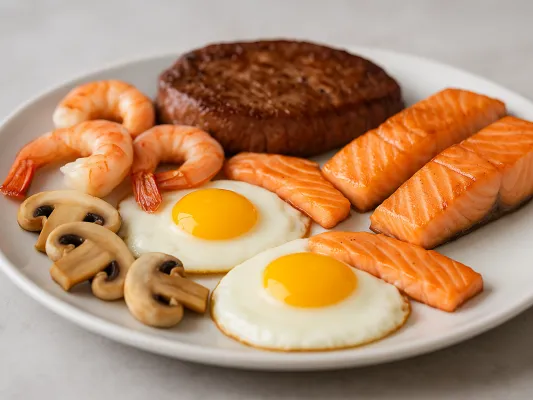
Breakfast is where most people struggle. Many start the day with coffee and carbs, then wonder why energy crashes by mid morning. Protein first at breakfast changes the entire day. Eggs, Greek yogurt, cottage cheese, protein smoothies, leftovers from dinner. There is no rule that breakfast has to look a certain way. It just has to contain protein.
At lunch, protein becomes your anchor again. Build the meal around a clear protein source first. Chicken, fish, beef, eggs, tofu, lentils. Then add vegetables and carbs based on training demands and appetite. When protein is in place, the rest of the plate becomes easier to manage.
Dinner follows the same logic. Protein first, then fill noticing hunger and recovery needs. Training days may need more carbs. Rest days may not. Protein stays constant. This consistency is what protects muscle over time.
Snacking becomes simpler too. When protein is low, people snack constantly. When protein intake is steady, snacking often disappears on its own. If you do snack, think protein again. Yogurt, protein shakes, boiled eggs, lean meats, cheese, or protein rich whole foods. These support recovery instead of just killing hunger temporarily.
One concern people raise is digestion. Eating more protein does not mean forcing huge portions. Spread it across the day. Chew well. Drink enough water. Choose quality sources. Most digestion issues come from stress and poor food choices, not protein itself.
Another concern is kidneys. In healthy individuals, higher protein intake has not been shown to damage kidney function. If someone has diagnosed kidney disease, protein intake should be guided medically. For the average person training and aging normally, protein is protective, not harmful.
Protein first is not a diet. It is a structure. It removes decision fatigue. It adapts to travel, work, family life, and stress. It works whether you train hard or lightly. And most importantly, it supports the one thing that predicts healthy aging better than almost anything else. Muscle.
You do not need perfection. You need consistency. Start with one meal a day. Make protein the priority. Then build from there.
Strong bodies age better. And protein is one of the simplest ways to support that process every single day.
Related reading
Nutrition for Strength and Healthy Aging
Live better longer.