
Daily Caloric Intake and Macros Calculator Explained
Calorie and macro calculators are everywhere. You plug in your height, weight, age, click a goal, and a number comes out. It looks precise. It feels scientific. But unless you understand what that number actually represents, it is easy to misuse it or trust it more than you should.
This calculator is built on the Harris Benedict formula. That formula estimates your resting metabolic rate. In simple terms, it estimates how many calories your body needs just to stay alive at rest. Breathing. Circulation. Basic cellular work. Nothing more.
A calculator gives a starting estimate, not a personal truth.
Harris Benedict uses different equations for males and females because average body composition and energy needs differ. It factors in bodyweight, height, age, and sex. That is all it knows. It does not know how much muscle you carry. It does not know how hard you train. It does not know how much you move outside the gym. It gives a starting estimate, not a personal truth.
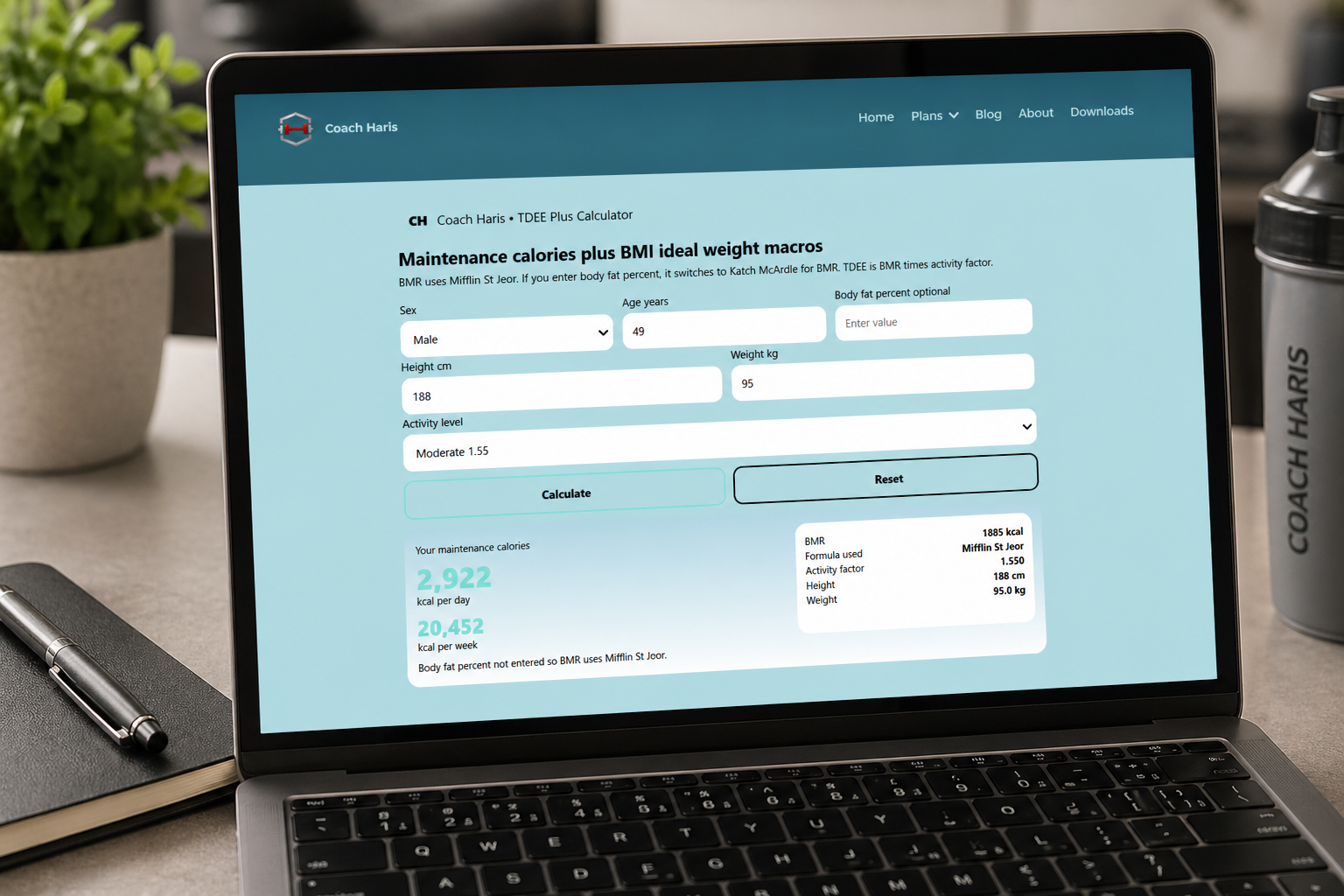
From that resting number, activity multipliers are applied. This is where daily caloric intake comes from. Lightly active. Moderately active. Very active. These categories are rough averages. Two people training four times per week can burn very different amounts of energy depending on intensity, body composition, and lifestyle. That is why calculators should guide decisions, not dictate them.
Macros are layered on top of this calorie estimate. Protein, carbohydrates, and fats are simply ways of distributing calories based on priorities. Protein supports muscle and recovery. Carbohydrates support training output and daily energy. Fats support hormones and basic function. The calculator assigns a structure, but it does not replace judgment.
People often treat the output as a rule instead of a reference. They eat to the number even when strength is dropping, recovery is poor, or hunger is out of control. Or they slash calories aggressively and blame willpower when performance collapses.
Used correctly, a calorie and macros calculator gives you a framework. It tells you roughly where maintenance might be. It gives you a reasonable place to start a deficit or surplus. From there, real feedback matters more than the math. Bodyweight trends. Strength levels. Energy. Sleep. Those signals tell you whether the intake fits your body.
Consistency matters more than precision. Hitting roughly the same intake day to day and adjusting slowly beats chasing perfect macro splits. Protein intake should be stable. Carbs and fats can move depending on training demands and preference. The calculator helps you organize that thinking without overcomplicating it.
One of the biggest mistakes is constantly recalculating instead of observing. Changing numbers every week without enough data leads to confusion. Another mistake is ignoring training output. If calories are set correctly but strength is falling fast, something is off.
Numbers should support training, not sabotage it.
This is why I use calculators as tools, not answers. They help set expectations and starting points. The real work happens in how you respond and adjust over time.
Calories and macros are not about control. They are about understanding what your body needs to perform, recover, and progress.
If you want to estimate your daily calories and macros, use the Daily Caloric Intake and Macros Calculator on my website. It is designed to give you a clear baseline without false precision.
If you want help interpreting the numbers, aligning them with training, or adjusting based on real world results, book a call and we will walk through it together.
Live better longer.