Diet Soda, Aspartame, and the Truth: A Coach Haris evidence based guide
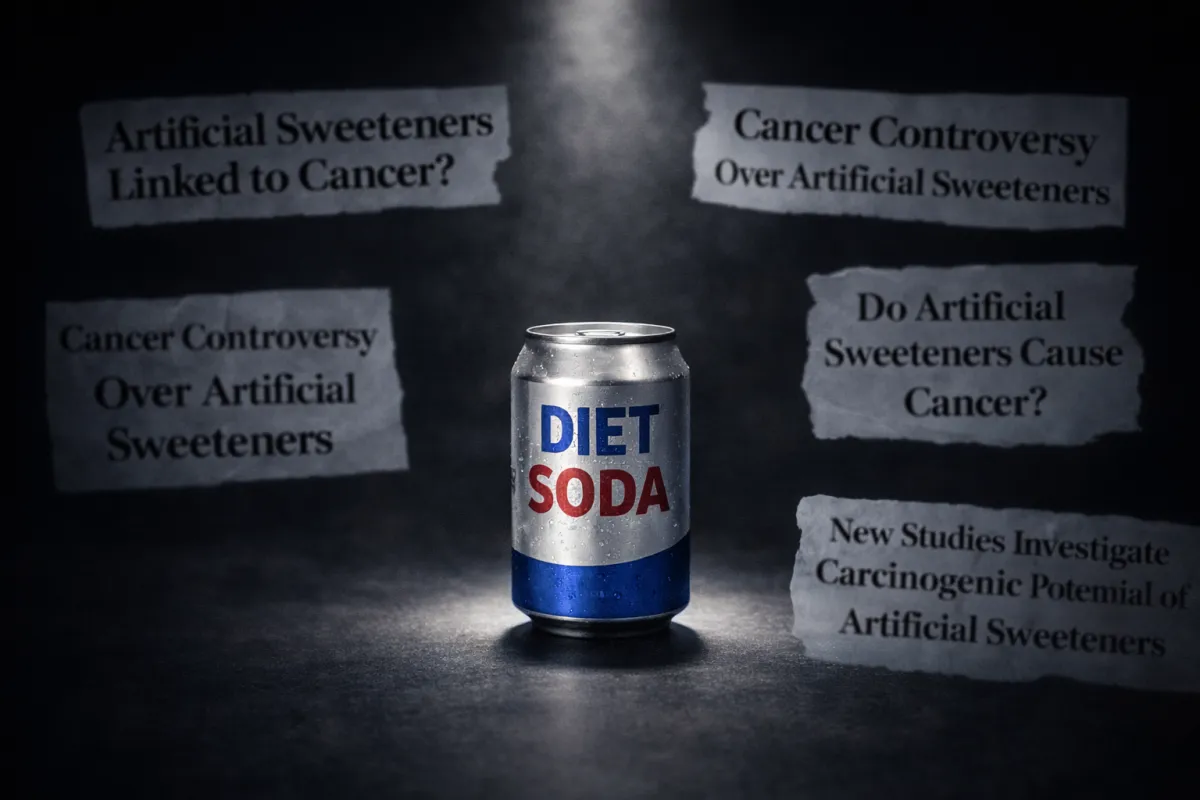
Every few months the same story returns.
A headline appears claiming that aspartame causes cancer. Another warns that diet soda is toxic. Social media fills with dramatic graphics explaining that artificial sweeteners “destroy metabolism” or “poison the brain.” Within hours the debate spreads again.
For something that has been used in food for more than forty years, aspartame still manages to trigger waves of fear.
I see this often with clients. Someone trying to lose weight replaces sugary drinks with Diet Soda. A few weeks later they read an alarming article online and immediately worry that they have traded one problem for another.
So the question comes up again. Is Diet Soda dangerous?
The answer requires stepping away from headlines and looking at how science actually evaluates food safety.
Headlines often amplify fear long before the scientific evidence is fully understood.
What Aspartame Actually Is
Aspartame is a low calorie artificial sweetener introduced in the early 1980s. It is roughly two hundred times sweeter than sugar. That level of sweetness means only very small amounts are required to sweeten a beverage.
A single can of diet soda contains a fraction of the mass that would be required if the drink were sweetened with regular sugar.
When aspartame is digested, it breaks down into three compounds. Phenylalanine, aspartic acid, and methanol. These names are often highlighted in articles designed to sound alarming.
Yet all three compounds are naturally present in common foods. Phenylalanine is an amino acid found in protein foods such as meat, eggs, and dairy. Aspartic acid is another amino acid that appears in many plant and animal proteins. Methanol is present in fruits and vegetables, with some foods containing higher amounts than a diet soda.
This does not mean aspartame is beneficial for health. But it does illustrate how easily chemistry terminology can be used to create fear when presented without context.
The Cancer Scare That Started the Panic
In 2023 the topic resurfaced once again when the International Agency for Research on Cancer classified aspartame as “possibly carcinogenic to humans.”
The phrase immediately spread across news outlets. To many readers this sounded like confirmation that diet soda causes cancer. But this classification needs careful interpretation.
Hazard does not mean risk. The difference is how much of a substance people actually consume.
IARC evaluates hazards rather than real world risk. A hazard classification indicates that a substance could potentially cause harm under certain conditions. It does not measure the probability of harm at the levels people normally consume.
The same classification category includes substances such as pickled vegetables and aloe vera extract.
In parallel with the IARC announcement, another scientific panel reviewed the safety data. The Joint FAO and WHO Expert Committee on Food Additives assessed actual intake levels and concluded that the existing acceptable daily intake did not need to change.
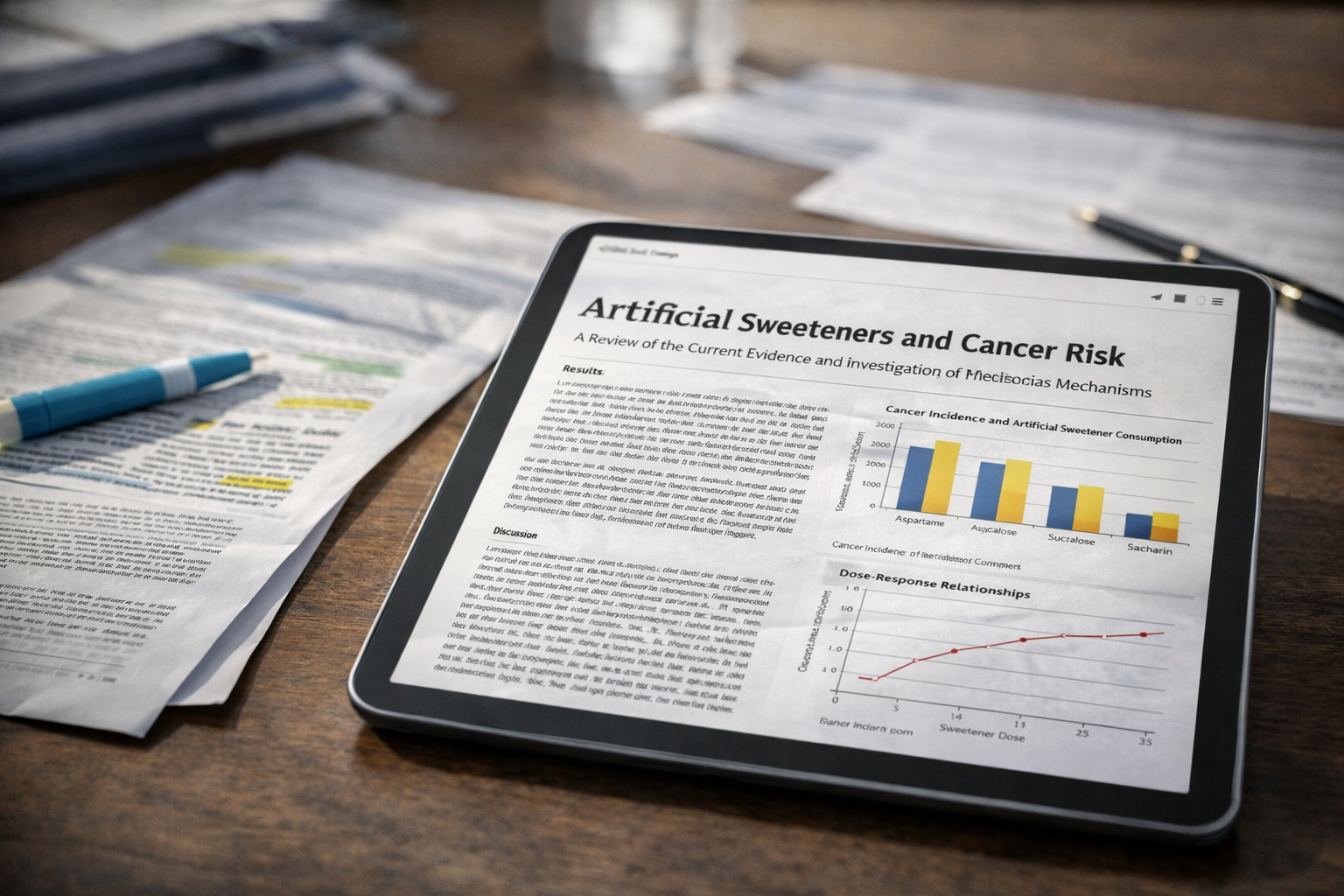
Scientific panels evaluate both theoretical hazards and real world exposure levels.
What Real Safety Limits Look Like
Food safety agencies establish something called an Acceptable Daily Intake, often abbreviated as ADI. This number represents the amount that can be consumed daily over a lifetime without expected health risk.
For aspartame the ADI is forty milligrams per kilogram of body weight per day.
To understand what this means in practice, consider a seventy kilogram adult. That person would need to consume roughly nine to fourteen cans of diet soda every day to reach the official limit.
Even then the limit itself already includes a significant safety margin. Regulatory agencies typically set the ADI at least one hundred times lower than the amount that produced harmful effects in animal studies.
This means that reaching the limit does not imply immediate danger. It simply marks the upper boundary of a very conservative safety threshold.
In real life, most people who consume diet soda remain far below this level.
What Research Actually Shows
Artificial sweeteners have been studied extensively. Thousands of scientific papers examine their effects on metabolism, body weight, and long term health outcomes.
However, the conclusions depend strongly on the type of study being considered.
Randomized controlled trials provide the strongest evidence. In these experiments researchers replace sugar sweetened beverages with artificially sweetened ones and observe the outcome. Many of these studies report modest reductions in calorie intake and body weight when sugar is replaced with low calorie sweeteners. Blood glucose control typically remains unchanged in healthy individuals.
Observational studies tell a more complicated story. These studies follow large populations over time and sometimes find associations between artificial sweetener consumption and conditions such as obesity, cardiovascular disease, or diabetes.
Yet these studies cannot establish cause and effect.

Large observational studies often identify associations but cannot prove cause and effect.
The Real Problem With Diet Drinks
One of the most common misconceptions I encounter is the belief that diet soda must either be extremely harmful or inherently healthy.
Neither position reflects reality.
Artificial sweeteners are simply tools. They provide sweetness without the caloric load of sugar. For someone trying to reduce sugar intake, this substitution can lower energy consumption.
But diet soda does not automatically improve overall diet quality.
If someone consumes diet soda alongside highly processed foods, inadequate protein intake, poor sleep, and minimal physical activity, removing sugar from one beverage will not dramatically change their health trajectory.
Long term health depends on the broader pattern of lifestyle behaviors rather than a single ingredient.
If you want to understand how food quality and protein intake influence long term health, read the guide on protein first nutrition and metabolic health.
In nutrition, overall dietary patterns matter far more than any single ingredient.
Fearmongering vs Reality
Nutrition discussions often drift toward extreme narratives. Certain foods or ingredients become symbolic villains. Over time these stories spread widely through social media, often detached from the underlying evidence.
Aspartame has become one of those symbols.
But when actual exposure levels are compared with safety thresholds, the difference is striking. To approach the acceptable daily intake a person would need to consume large quantities of diet soda every day.
Most individuals do not drink anywhere near that amount.
This contrast highlights the difference between theoretical concerns discussed in research settings and the way people actually consume these products.
When You Should Avoid Aspartame
There is one medical condition where aspartame must be avoided completely.
People with phenylketonuria cannot metabolize the amino acid phenylalanine. Because aspartame breaks down into phenylalanine, individuals with this condition must avoid products that contain it.
For this reason food products containing aspartame carry a clear warning label.
For the rest of the population, current scientific assessments do not indicate clear harm at typical consumption levels.
Practical Recommendations
In my coaching practice I prefer simple principles:
Water should remain the primary beverage for daily hydration.
Diet soda can be consumed occasionally without major concern for most healthy adults.
A single can per day falls far below established safety limits. At the same time it makes little sense to develop a habit of consuming multiple cans daily.
More importantly, individuals should focus on improving the overall structure of their diet. Whole foods, adequate protein intake, consistent training, and quality sleep will have a far greater impact on long term health than the occasional artificially sweetened drink.
The Bottom Line
Aspartame remains one of the most extensively studied food additives in modern nutrition science. Some studies raise questions and continue to explore possible long term effects. Many others demonstrate safety within established intake limits.
Major regulatory agencies around the world continue to evaluate the data and currently consider aspartame safe when consumed within those limits.
Public discussion often amplifies uncertainty and risk while ignoring the context of real life consumption.
Diet soda is not a health drink. It should not replace water as the primary source of hydration. But the occasional can is unlikely to determine someone’s health outcome.
In nutrition, context and long term habits matter far more than any single ingredient.
Sources
World Health Organization (2023). Aspartame hazard and risk assessment results released. WHO Press Release.
Joint FAO/WHO Expert Committee on Food Additives (JECFA). Evaluation of Aspartame Safety and Acceptable Daily Intake.
International Agency for Research on Cancer (IARC) (2023). Aspartame classification and carcinogenicity evaluation.
American Cancer Society (2023). Aspartame and Cancer Risk. Cancer.org.
Debras C, et al. (2022). Artificial sweeteners and risk of cardiovascular diseases. BMJ.
Toews I, et al. (2019). Association between intake of non sugar sweeteners and health outcomes. BMJ.
Miller P.E., Perez V. (2014). Low calorie sweeteners and body weight and composition: a meta analysis of randomized controlled trials and prospective cohort studies. American Journal of Clinical Nutrition.
World Health Organization (2023). Guideline on non sugar sweeteners.
Sylvetsky A., Rother K. (2018). Trends in the consumption of low calorie sweeteners and health effects. Current Obesity Reports.