
Progressive Overload in Strength Training: How Muscles Get Stronger Over Time
Progressive overload is the foundation of effective strength training and long term muscle development.
Strength training only works when the body is challenged beyond what it has already adapted to. Muscles grow, strength improves, and performance increases only when training provides a stimulus that is slightly greater than before.
This principle is called progressive overload.
It is the foundation of every effective strength program. Without it, training becomes repeated activity rather than a process that drives adaptation.
The human body is remarkably efficient at adapting to stress. When a specific load, volume, or effort level is repeated week after week, the body eventually becomes comfortable with that demand. Once that happens, progress slows or stops.
Progressive overload solves this problem by gradually increasing the demands placed on the body. If you want to understand why strength training is essential for long term health and aging, read the complete guide to Strength Training for Longevity
These increases do not need to be dramatic. In fact, small improvements applied consistently over time create the strongest long term results.
Strength training can apply progressive overload in several ways.
The key is understanding when and why to use each method.
What Is Progressive Overload
Progressive overload is the principle of gradually increasing the demand placed on the body during training. This can be done by adding weight, performing more repetitions, increasing effort, or increasing total training volume. Without progressive overload, strength and muscle development eventually stop.
Strength training only works when the body is challenged beyond what it has already adapted to.
Increasing the Load: The Simplest Form of Progressive Overload
The simplest and most direct form of progressive overload is adding weight to the exercise.
If a lifter performs eight repetitions with a certain weight today and later performs the same number of repetitions with a heavier load, the muscle was forced to adapt to a greater mechanical demand.
Mechanical tension is the primary signal that stimulates muscle growth. Heavier loads increase this tension and recruit a larger number of muscle fibers.
This method works particularly well in moderate repetition ranges between six and twelve repetitions, where additional weight can be added while maintaining control of the movement.
However, increasing the load should never compromise technique. Shortening the range of motion, swinging the weight, or losing control of the movement removes tension from the target muscle and shifts stress to joints and connective tissues.
Progressive overload requires better performance, not just heavier numbers.
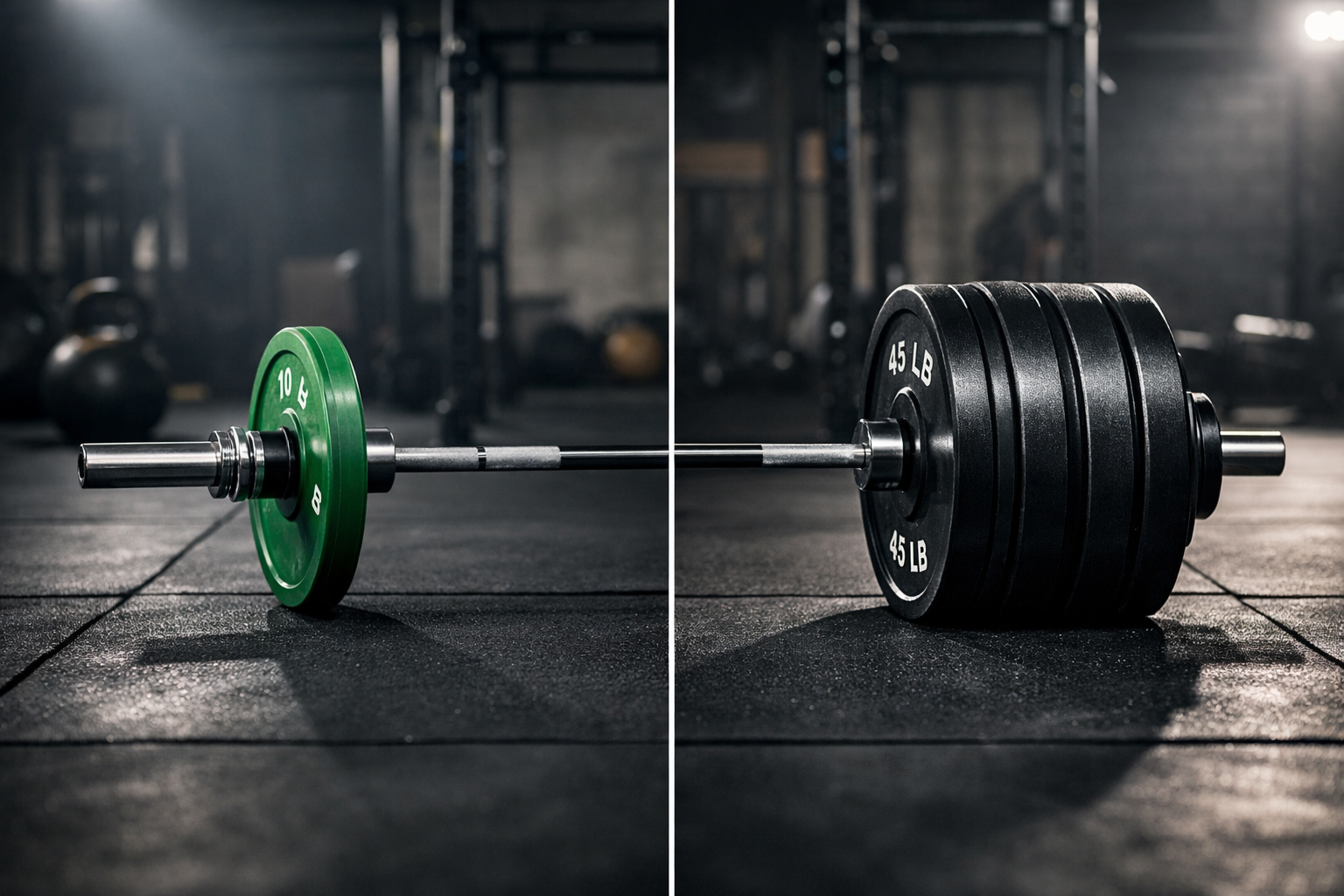
Adding weight increases mechanical tension and forces the body to adapt.
Increasing Repetitions: Another Way to Apply Progressive Overload
Progress can also occur by performing more repetitions with the same weight.
If a lifter squats one hundred kilograms for six repetitions in one session and performs eight repetitions with the same weight a few weeks later, the total workload has increased even though the load stayed the same.
This approach increases time under tension. The muscle is forced to maintain force production for a longer period during the set. It is particularly effective in hypertrophy focused training where sets are performed close to muscular failure.
The additional repetitions must still be challenging. Repetitions performed far from fatigue create minimal stimulus and mainly accumulate unnecessary fatigue.
When applied properly, adding repetitions provides a clear and measurable way to progress while maintaining technical consistency.
Training Closer to Failure for Progressive Overload
Muscle fibers are recruited according to the level of effort required during a set.
Lower effort sets recruit fewer fibers. As effort increases and fatigue accumulates, larger and stronger muscle fibers are recruited to maintain force production. These high threshold fibers play a major role in muscle growth and strength development.
Training closer to muscular failure increases fiber recruitment without changing the load itself. For example, a set that stops several repetitions early produces a smaller stimulus than a set that approaches the point where another repetition would not be possible.
This strategy works well for hypertrophy training and isolation movements where fatigue can be managed more safely.
Constantly reaching absolute failure, however, can create excessive fatigue and interfere with recovery, especially during heavy compound lifts. The goal is to train with high effort while still maintaining good form and recovery capacity.
Progressive overload is not about lifting heavier every session. It is about gradually increasing training demand over time.
Increasing the Number of Sets for Progressive Overload
Another method of progressive overload involves increasing the total number of working sets performed for a muscle group. Additional sets increase total weekly training volume, which increases the cumulative exposure to mechanical tension.
For example, moving from three working sets of an exercise to four or five sets increases the total workload placed on the muscle during the week. Volume plays an important role in hypertrophy because repeated exposure to tension stimulates muscle protein synthesis across multiple sessions.
However, volume is effective only when the sets themselves are performed with sufficient effort. Increasing the number of low intensity sets does little to stimulate adaptation.
Volume increases are most useful after progress from load, repetitions, or effort begins to slow.
Manipulating Tempo in Strength Training
Tempo refers to the speed at which each repetition is performed. Slowing down the lowering phase of a lift, pausing in the stretched position, or controlling the lifting phase can increase muscular tension and improve technical control.
Tempo manipulation is particularly useful when learning a movement or when heavier loads are not available. For example, a controlled eccentric phase during a squat or bench press can increase muscle activation and improve positional awareness.
Despite these benefits, tempo changes should not replace traditional overload strategies. Muscles adapt primarily to force production and effort rather than to artificially increased difficulty.
Tempo works best as a secondary tool that supports technique development and muscle control.

Tracking weights, repetitions, and sets ensures training stress is progressing.
How to Apply Progressive Overload in Strength Training
Progressive overload is not limited to lifting heavier weights. It represents a gradual increase in training demand over time.
Load can increase
Repetitions can increase
Effort can increase
Training volume can increase
Each of these adjustments challenges the body slightly more than before. When these increases occur consistently, the body adapts by becoming stronger, building muscle, and improving resilience.
Tracking performance is essential. Recording weights, repetitions, and sets allows clear evidence that training stress is progressing.Without measurable progression, training sessions can easily become repetitive rather than productive.
Strength training works because the body responds to stress by becoming more capable of handling that stress in the future.
Progressive overload is the structured way of applying that stress. It turns training from simple exercise into a long term system for building strength, muscle, and health.
FAQs About Progressive Overload
What is progressive overload in strength training?
Progressive overload means gradually increasing the demands placed on the body during training so muscles are forced to adapt and grow stronger.
How do you apply progressive overload?
Progressive overload can be applied by increasing weight, performing more repetitions, increasing training effort, or increasing total training volume.
Is progressive overload necessary for muscle growth?
Yes. Without progressive overload the body adapts to the training stimulus and muscle growth eventually stops.
How often should progressive overload happen?
Progressive overload does not need to happen every workout. Small increases applied consistently over weeks and months produce the most sustainable results.
────────
If you want to understand how strength training supports long term health, read the full guide on strength training for longevity.