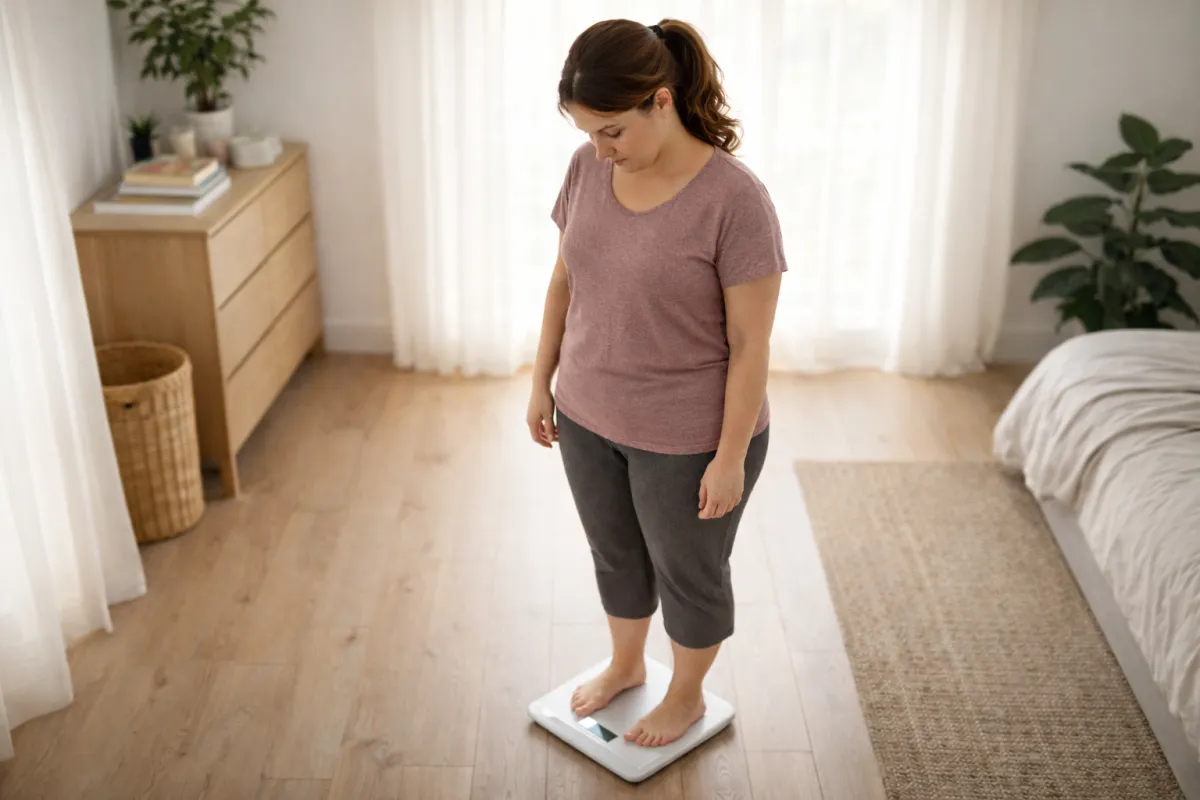
When You’re Doing Everything Right and Still Not Losing Weight
You are training. You are eating better.
You are showing up even on days when motivation is low. And still, the scale does not move.
That is a frustrating place to be. Not because you expected miracles, but because you are genuinely trying. You cleaned things up. You made changes. You committed. When the number stays the same week after week, it starts to feel personal, like your body is ignoring the work you are putting in.
In many people, the body gets metabolically healthier before it gets lighter. This is not a mindset trick. It is physiology. When you start training consistently and improving food quality, muscle tissue adapts early. It becomes more sensitive to insulin. It pulls glucose out of the bloodstream more efficiently. Fat oxidation improves. Energy handling gets cleaner. These changes happen inside the muscle long before they show up as visible weight loss.
This idea has been shared by scientists like Rhonda Patrick, who does a good job translating research for the public. But the work itself comes from metabolic physiology labs. One key contributor is Bruce Goodpaster, whose research focuses on muscle metabolism and insulin sensitivity. In a 2017 paper published in Diabetes, his team showed that during diet and exercise interventions, improvements in muscle insulin sensitivity, glucose uptake, and fat use happened early. These changes came before large or consistent changes in body weight.
In simple terms, the body starts working better before it starts weighing less.
That can feel unfair when you are putting in high effort and your patience is being tested. But it explains why strength often goes up while the scale stays flat. It explains why waist measurements or body fat percentage improve while bodyweight does not move. It explains why energy improves even when the number does not.
Muscle is responding.
The scale is being late.
There has been follow-up research to support this. Clamp and colleagues studied people who had lost weight and kept it off long term. They found that these individuals had better insulin sensitivity than people of the same body weight who had never gone through weight loss. Same weight, but different metabolic health. Published in Nutritional Diabetes in 2017.
This matters because it reframes what progress actually looks like.
Metabolic health is not defined by your current weight alone. It reflects how well your body handles glucose, fat, and insulin over time. Two people can weigh the same and have very different internal health. One body is efficient and flexible. The other is struggling to manage fuel. The scale cannot tell the difference.
When you judge progress only by weight, you risk stopping during the most important phase. The phase where your body is relearning how to function properly. The phase where muscle becomes metabolically active again. The phase that sets the foundation for later fat loss.
To track real progress during this phase, use a tape measure based body fat calculator instead of relying only on scale weight.
If you are doing your best and feeling stuck, it does not mean nothing is happening. It often means something important is happening quietly, under the surface, where real change actually starts. The work you are putting in is being absorbed. Your system is adapting, even if it is not obvious yet. This is usually the hardest phase, because it asks for patience without giving instant feedback.
Progress is not always loud or dramatic. Sometimes it shows up as better strength, steadier energy, more control around food, and a body that feels a little easier to live in day by day. Those are not small wins. They are signs that things are moving in the right direction.
So if you are questioning yourself, pause before you quit. You are not failing. You are building. And if you stay with it, the scale will catch up later.
If you are stuck in this phase, you might need structure, feedback, and adjustments over time.
This is where online personal training works well. Training, nutrition, and recovery are adjusted week by week based on how your body responds, not just what the scale shows.
Live better longer
References
Goodpaster BH, Sparks LM. Metabolic flexibility in health and disease.
Diabetes. 2017;66(7):1646–1655. https://doi.org/10.2337/db17-0058
Clamp LD, Hume DJ, Lambert EV, Kroff J. Enhanced insulin sensitivity in successful, long-term weight loss maintainers compared with matched controls with no weight loss history.
Nutrition & Diabetes. 2017;7:e282. https://doi.org/10.1038/nutd.2017.31